
PM Modi Sets December 15 Deadline For Parliament Preparations: Why Winter Session Is Crucial For NDA
PM Modi has asked ministers to stay prepared for the Winter Session before December 15. With the delimitation bill facing a numbers challenge and opposition protests looming, here's what's at stake.
- India News
- 4 min read


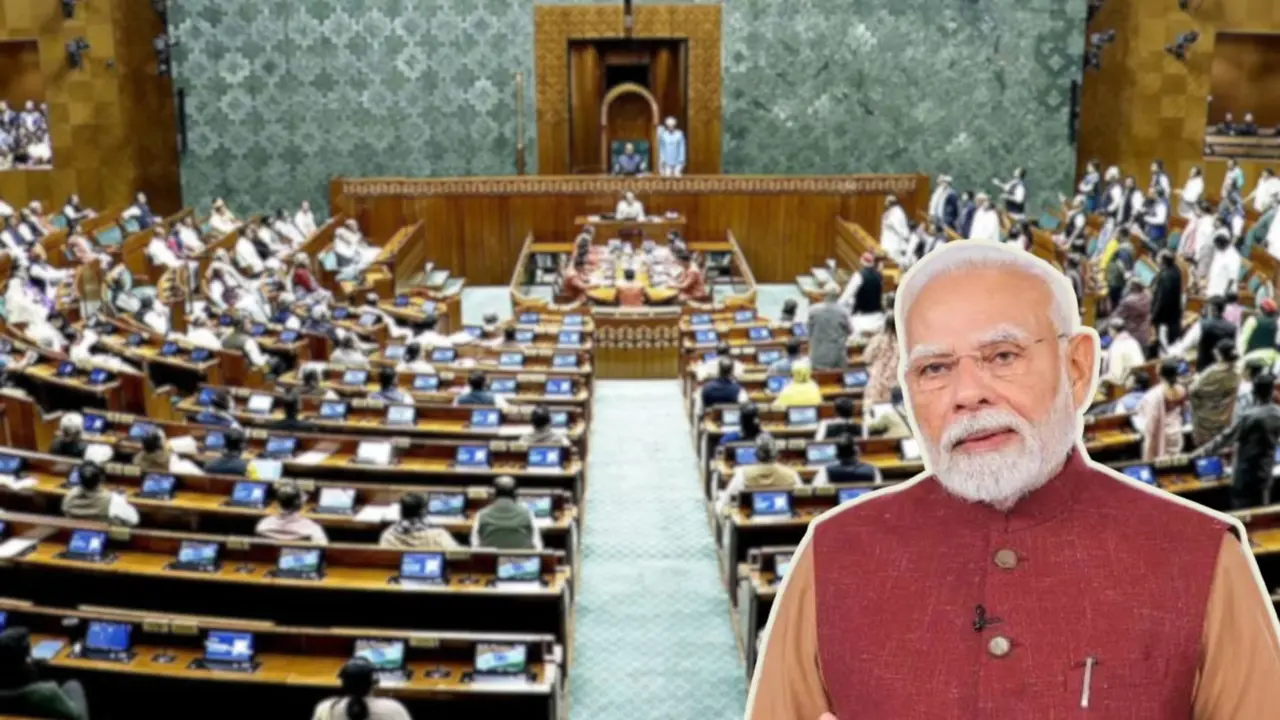
New Delhi: Prime Minister Narendra Modi has asked his ministers to complete the necessary preparations for the upcoming Parliament session before December 15 and avoid foreign visits in the run-up to it, indicating that the government is preparing for a crucial round of legislative business amid mounting political challenges.
According to reports, PM Modi gave the order during Wednesday's Cabinet meeting. The Prime Minister wants ministries to be completely prepared before Parliament reconvenes, according to those involved with the talks. The ultimate decision about the dates and length of the session will be made by the Cabinet Committee on Parliamentary Affairs.
Why Is The Winter Session Facing Questions Over Delay?
The government's preparations come as opposition parties continue to question why the Winter Session has not yet been convened. Although both Houses were adjourned indefinitely on August 13, the Monsoon Session is still officially unprorogued. It had been 103 days since the adjournment by Wednesday night.
The official process used to end a legislative session is called prorogation. Opposition parties have questioned the government's plans as a result of the delay, which has also fueled rumors of a potential special session of Parliament.
Advertisement
The timing is especially important because the government is debating laws related to women's reservations and delimitation. The proposed constitutional change would be one of the most significant political challenges of the next session if it is introduced.
Delimitation Bill: Why Does The Government Need Opposition Support?
The proposed Constitution (131st Amendment) Bill, 2026, faces a significant numbers challenge. The bill needs a two-thirds majority in the Lok Sabha, which is equivalent to 361 votes given the House's total membership of 543. The House presently has 540 members, including three vacancies.
Advertisement
With only 320 MPs, the NDA will require the backing of opposition parties in order to pass the law.
However, since the bill was rejected in the Lok Sabha on April 17, the political landscape has shifted. Since then, twenty-six MPs have left the opposition. This includes 20 rebellious members of the Trinamool Congress who joined the Nationalist Citizens Party of India (NCPI) after breaking away and promising to back the NDA. Another six Shiv Sena (UBT) MPs shifted to the Eknath Shinde-led Shiv Sena.
Despite these changes, the ruling alliance still needs additional votes to reach the required majority. The DMK, with 22 Lok Sabha MPs, and the NCP (Sharadchandra Pawar), which has eight MPs, could therefore play an important role in determining the bill's fate.
SIR Protests, Delimitation: What Could Make The Session Stormy?
The government will also have to deal with opposition demonstrations over the Special Intensive Revision (SIR) of electoral rolls. Chief Election Commissioner Gyanesh Kumar's resignation is being demanded by opposition parties, who have intensified their campaign against the procedure. It is anticipated that these protests would overflow into Parliament, possibly impacting the proceedings.
A member of the ruling alliance has stated that it would be challenging to consider and vote on a bill amending the Constitution unless the House runs smoothly.
The government's goals may also be impacted by procedural requirements. While calling a completely new session necessitates a minimum notice period of 14 days, extending the current session requires at least two days' notice.
Meanwhile, the government is understood to be examining a proposal to increase Lok Sabha seats by 50 per cent across all states. The formula is aimed at addressing concerns, particularly among southern states, that delimitation could reduce their relative political representation.
Under the proposal being considered, the existing proportion of seats allocated to states based on the 1971 Census would be retained. However, the government has not taken a final decision on the formula.
The Constitution (131st Amendment) Bill, 2026, failed to secure the required support during the special sitting of Parliament on April 17. With the Winter Session expected before December 15, its possible reintroduction will be closely watched, particularly as the government navigates both the numbers in the Lok Sabha and an increasingly assertive opposition.
Get Current Updates on India News, Entertainment News, Cricket News along with Latest News and Web Stories from India and around the world.