
'America Is More Isolated': Schumer, Shapiro Blast Trump’s New Tariffs On India, China, EU, Warn Of Higher Costs For Americans
US President Donald Trump's proposed tariffs on 14 trading partners, including India, face strong Democratic opposition as Schumer and Shapiro warn of higher costs for American families and strained ties with allies.
- Global News
- 5 min read


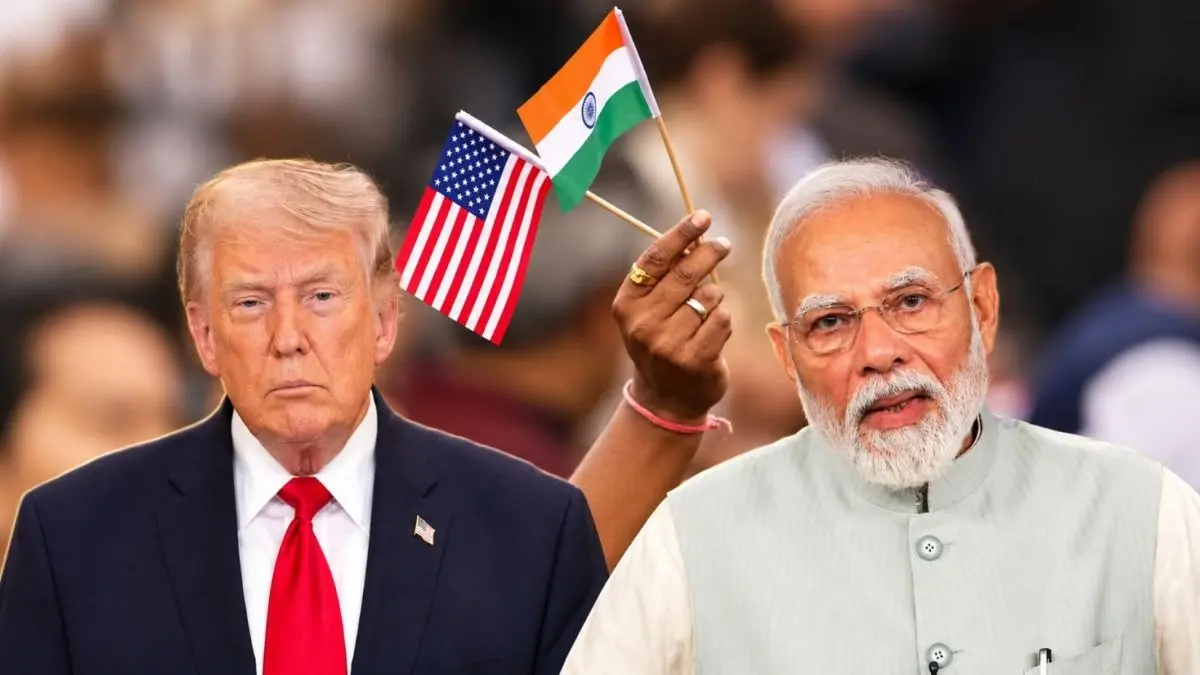
Washington: Democratic leaders have harshly criticized US President Donald Trump's most recent tariff proposal, claiming that it might raise household expenses, erode relations with important allies, and jeopardize Washington's attempts to combat China's trade policies.
Due to accusations of unfair trade practices and excess industrial capacity, Washington proposed to put new tariffs on 14 trading partners, including China, India, and the European Union. This proposal sparked the outcry. US politicians are worried that American consumers and businesses may end up footing the bill due to the proposed levies, which may exceed 20%.
A number of Democratic leaders have questioned the timing and strategy of the actions, claiming that the United States may become diplomatically isolated if it targets allies alongside nations accused of unfair trade practices.
Why Are US Democrats Opposing Trump's Latest Tariff Move?
The increased cost of living in the US, especially as people get ready for Thanksgiving, has been linked by Democratic leaders to the planned tariffs.
Advertisement
Senate Democrats pointed to increased grocery prices and reductions in the Supplemental Nutrition Assistance Program (SNAP) as evidence that the Trump administration's trade and economic policies are making the affordability situation worse.
“This year many Americans are struggling to afford food for Thanksgiving. Why? Trump and Republican tariffs, SNAP cuts, and other policies have sent grocery prices skyrocketing. They created this affordability crisis, and working families are paying the price," the Senate Democrats said in a post on X on November 25.
Advertisement
Congresswoman Grace Meng also criticised the administration, highlighting the impact of its economic policies on communities across the country.
“From New York City’s Chinatown to Chicago’s Little India to Orange County’s Little Saigon, our communities are being crushed by Trump’s failed economic policies.."
Pennsylvania Governor Josh Shapiro questioned why Washington was imposing additional duties on its allies while attempting to address China's trade practices.
“This is yet another example of Trump’s chaotic use of tariffs that is only driving up costs on Americans. He fails to understand that we can’t effectively confront China’s unfair trade practices when we are putting reckless, poorly targeted new tariffs on our allies at the same time. Here’s the effect: America is more isolated from our allies and weakened around the globe, while American consumers pay more here at home," Shapiro wrote on X.
Senate Minority Leader Chuck Schumer also accused Trump of handling the China trade issue poorly and shifting the financial consequences onto American families.
“Donald Trump never learns. The bad actor here is China, and instead of addressing the problem, Trump continues to let them dictate the terms while alienating our allies and passing the costs onto American families, with little benefit for American workers.
Change is coming in January," Schumer said.
Which Countries Could Face The New US Tariffs?
The United States conducted a months-long examination of surplus manufacturing capacity and production in multiple nations, which led to the proposed levies. Days after Trump's initial broad tariffs were overturned by the US Supreme Court, the probe got underway.
The latest proposal covers 14 trading partners: China, the European Union, India, Bangladesh, Cambodia, Indonesia, Japan, South Korea, Malaysia, Singapore, Switzerland, Taiwan, Thailand and Vietnam.
China is one of the nations that would be subject to the highest suggested tariff rates, which may reach 20%. The suggested measures, according to US Trade Representative Jamieson Greer, fall within the purview of Washington's current trade talks with Beijing.
Speaking anonymously to AFP, a senior US official stated that the administration had considered current trade agreements while drafting the suggestions.
The duties are not final yet. They will first undergo a public consultation process, following which the administration could move towards implementation. The new tariffs could come into force as early as January.
How Has India Responded To The Proposed 17% Tariff?
India has insisted that ongoing bilateral talks, not individual actions, should be used to settle trade-related disputes with the United States.
The response came after Washington proposed a 17% tariff on Indian goods. In a statement on Wednesday, the Commerce Ministry said New Delhi and Washington were continuing discussions on a Bilateral Trade Agreement and were working towards concluding it at the earliest.
“India and the United States are engaged in negotiations for a Bilateral Trade Agreement," the ministry said.
“It has been India’s position that any trade-related concerns should be addressed within the framework of these negotiations," it added.
New Delhi also said it had cooperated with Washington during the investigation into excess manufacturing capacity. According to the Commerce Ministry, India's Department of Commerce had informed the US that the country did not have structural excess capacity in any sector.
“India engaged constructively throughout this investigation," the ministry said.
“In response…the Department of Commerce stated that India does not have structural excess capacity in any sector," it added.
The proposed tariff has also brought renewed uncertainty to the interim trade understanding reached between the two countries in February. The agreement was intended to lower US duties on Indian goods, but the Supreme Court's decision to strike down Trump's earlier sweeping tariffs complicated its implementation.
Despite the uncertainty, negotiations between New Delhi and Washington have continued. India has reiterated that outstanding trade concerns should be settled through the proposed bilateral trade agreement.
For now, the latest tariff proposals remain subject to public consultation. However, the criticism from Democratic leaders and India's response underline the wider economic and diplomatic concerns surrounding Washington's renewed trade measures.